Environmental impacts of raking or blowing leaves into the lakes:
Increased nutrient levels: Leaves contain nutrients like nitrogen and phosphorus that, when decomposed in water, act as a fertilizer, leading to an excess of nutrients in the lakes.
Algae blooms: The extra nutrients can fuel the rapid growth of algae, which can clog the water and create an unpleasant, unhealthy environment.
Decreased dissolved oxygen: When algae blooms die and decompose, the process uses up a lot of dissolved oxygen in the water, which can suffocate fish and other aquatic organisms.
Increased weed growth: The increased nutrients can also cause excessive growth of aquatic weeds.
Bottom sediment buildup: Leaves can accumulate on the lake bottom, creating a layer of muck that buries the natural lakebed and can be harmful to organisms living there.
NIPSCO will conduct scheduled flood gate maintenance at the Norway Dam on Monday, Sept. 21, 2026. Maintenance is expected to begin at approximately 9:00 am EST and conclude at 6:00 pm EST. During maintenance, varying amounts of water may be released through the flood gates. Lake levels are NOT expected to be impacted. To help ensure public safety, NIPSCO is coordinating with emergency management officials. Public recreational areas near the dam will be temporarily closed throughout the scheduled maintenance work. Boaters, anglers and other recreational users are encouraged to avoid the area until maintenance is complete. Scheduling information along with current lake level and flows can be found by visiting https://www.nipsco.com/our-company/about-us/hydro-power/.
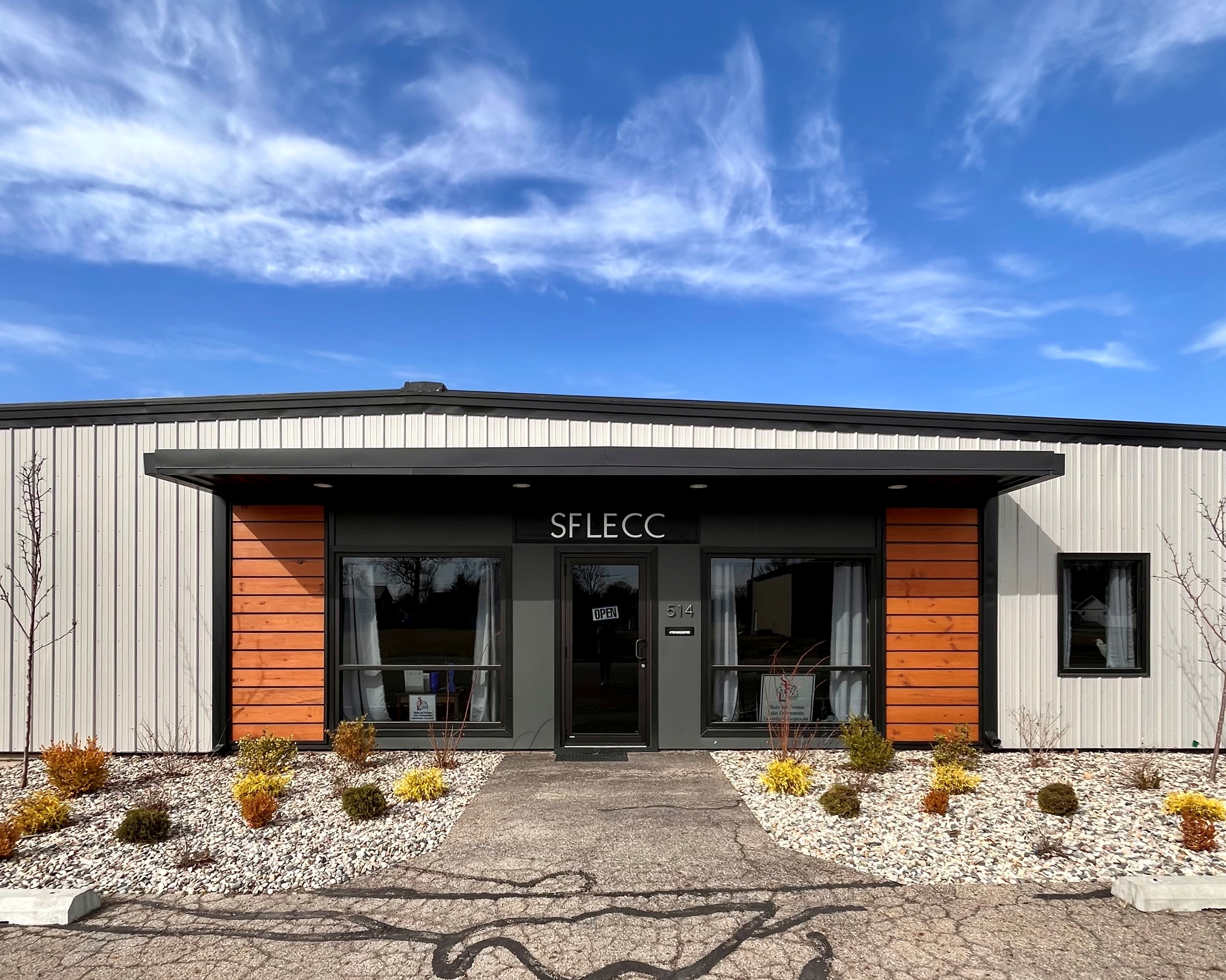
The Annual Meeting of the Shafer Freeman Lakes Environmental Conservation Corporation will be on Saturday, August 29th, 2026 at the SFLECC Office – 514 S Railroad Street Monticello, IN 47960. The meeting will begin at 10:00 a.m. Because there are five candidates and five Board of Director positions available, no vote will be taken and all candidates will automatically be elected.
STEVE POLLACK – INCUMBENT
3721 S Jamaica Ct – Lake Freeman – Lic# 1260114
Employed by: Director at Managed Services GSI, Inc
Previous SFLECC Experience: On the SFLECC Board for the past 3 years and have participated on several committees.
Other Non-Profit Experience and Current Board Positions: Park District Basketball and Football Coach, and built and managed a travel basketball program.
Education & Skills that would add value to the Board: Bachelor of Science Degree in Accounting from Southern Illinois University. Manages ERP implementations and Infrastructure for over 60 clients.
Reasons for wanting to be an SFLECC Director: To help enhance the Twin Lakes Experience, as well as help anticipate and react in advance to situations that could jeopardize the ecosystem of our lakes.
MIKE TRIPLETT – INCUMBENT
4866 N Boxman Pl – Lake Shafer – Lic# SC26003
Employed by: Owner of The Lighthouse Lodge on Lake Shafer
Previous SFLECC Experience: SFLECC Board Member for several years, and has been Board President in the past.
Other Non-Profit Experience and Current Board Positions: Member of the Monticello Rotary Club since 2005 and is a member of the White County Tourism Authority Board.
Reasons for wanting to be an SFLECC Director: Started coming to the Twin Lakes area in 1949 and bought first summer home in 1984, then purchased existing home in 1993. Has lived here full time for over 20 years. Firmly believes in Conservation for our Natural Resources, while enjoying the recreational facilities available throughout the area.
COLIN BONDERMAN
4213 E Penrod Dr – Lake Shafer – Lic# 1261752
Employed by: Senior System Administrator at Indiana University Health
Previous SFLECC Experience: SFLECC Shorefront License holder since 2025.
Other Non-Profit Experience and Current Board Positions: Analytical Control Systems Board of Director
Education & Skills that would add value to the Board: BA in Computer Science – Indiana University Bloomington
Reasons for wanting to be an SFLECC Director: Has enjoyed many years of visiting Lakes Shafer and Freeman and is now a proud homeowner on Lake Shafer. Is interested in ensuring that the lakes continue to be usable by all in a sustainable manner.
BILL SASSMAN
6634 N Apple Knob Dr – Lake Shafer – Lic# 1261360
Employed by: Retired from Regional Facilities and Construction Manager
Previous SFLECC Experience: SFLECC Shorefront License holder since 2002.
Other Non-Profit Experience and Current Board Positions: President – Indianapolis Masonic Temple Assn, Past President – Grant Hamill Foundation, Voting Member – DeMolay International, Past President – South Bend Scottish Rite of Board of Directors.
Education & Skills that would add value to the Board: Organizational skills including bringing together people with differing viewpoints to build a team working towards the same goal. Experience in managing various levels of employees and volunteers. Has managed large amounts of real estate and assets and scheduled projects and set annual budgets.
Reasons for wanting to be an SFLECC Director: To offer experience and help set the course for a beneficial and successful future for the lakes, its residents, and SFLECC.
DAN SINGLETON
6035 N Butterfield Loop – Lake Shafer – Lic# 1260746
Employed by: Retired National Grounds Manager for Sodexo
Previous SFLECC Experience: SFLECC Shorefront License holder since 2021.
Other Non-Profit Experience and Current Board Positions: Former President of Sons of the American Legion – Post 67.
Education & Skills that would add value to the Board: Erosion Control, owned a Landscape company for 35 years, weed control.
Reasons for wanting to be an SFLECC Director: Looking to clean up the lakefront of old boats, lifts & piers. Help maintain the lakefront for beautification and use.
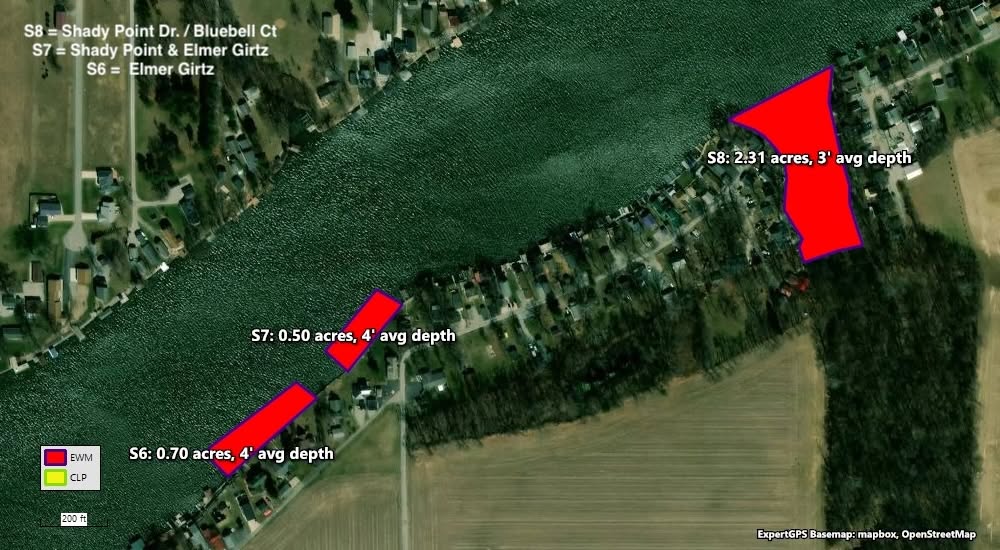
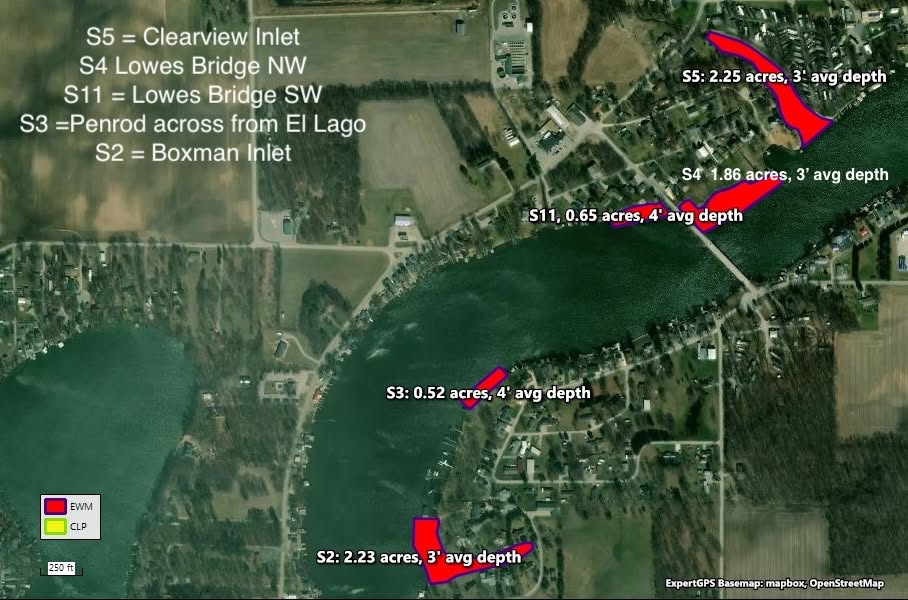
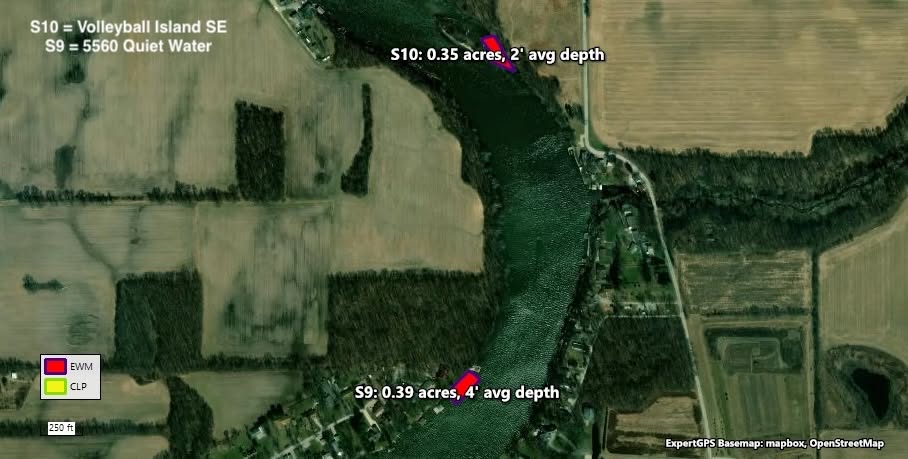
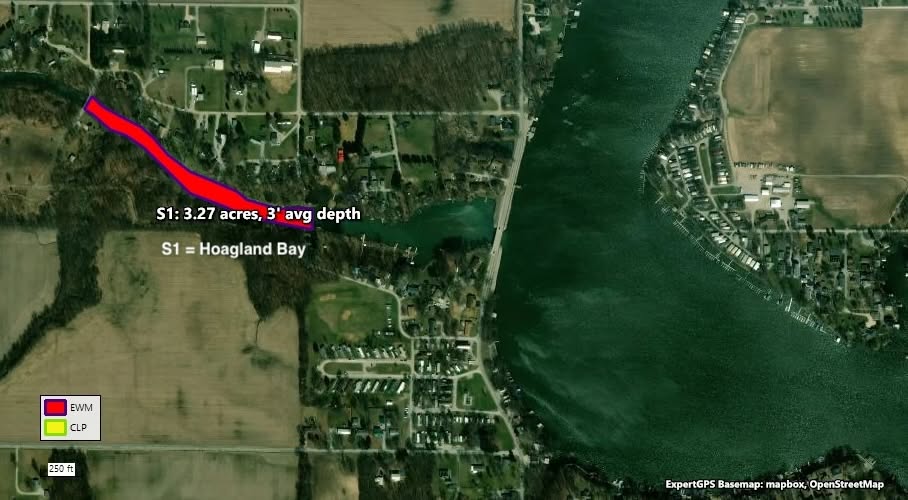
As part of an ongoing effort to control the spread of an invasive weed, the Eurasian Watermilfoil, the SFLECC has commissioned Aquatic Controls to treat several sites on Lake Shafer on Monday, July 13th, 2026.
On July 13th, 2026, Aquatic Control Inc. will be spraying the selective aquatic herbicide, ProcellaCOR EC, approved for use in aquatic environments by the INDNR, Office of Indiana State Chemist, IDEM, US Dept. of Agriculture, US Fish & Wildlife, and USEPA. It is a selective herbicide that when used in compliance with its label will have no adverse effect on humans and other non-target organisms. There are no restrictions for drinking or recreational purposes, including swimming and fishing. In regard to lake-fed turf irrigation, turf may be irrigated immediately after treatment. For irrigation of landscape vegetation or other forms of non-agricultural irrigation, a restriction of 1 day will be warranted. Aquatic Control Inc. will be posting signs on the day of treatment near the areas that will be sprayed to inform property owners of the restriction that was stated previously. If there are any questions regarding treatment or chemicals being used, please call (219)476-7663, ext. 3204 for the Northern Lakes Biologist on staff.
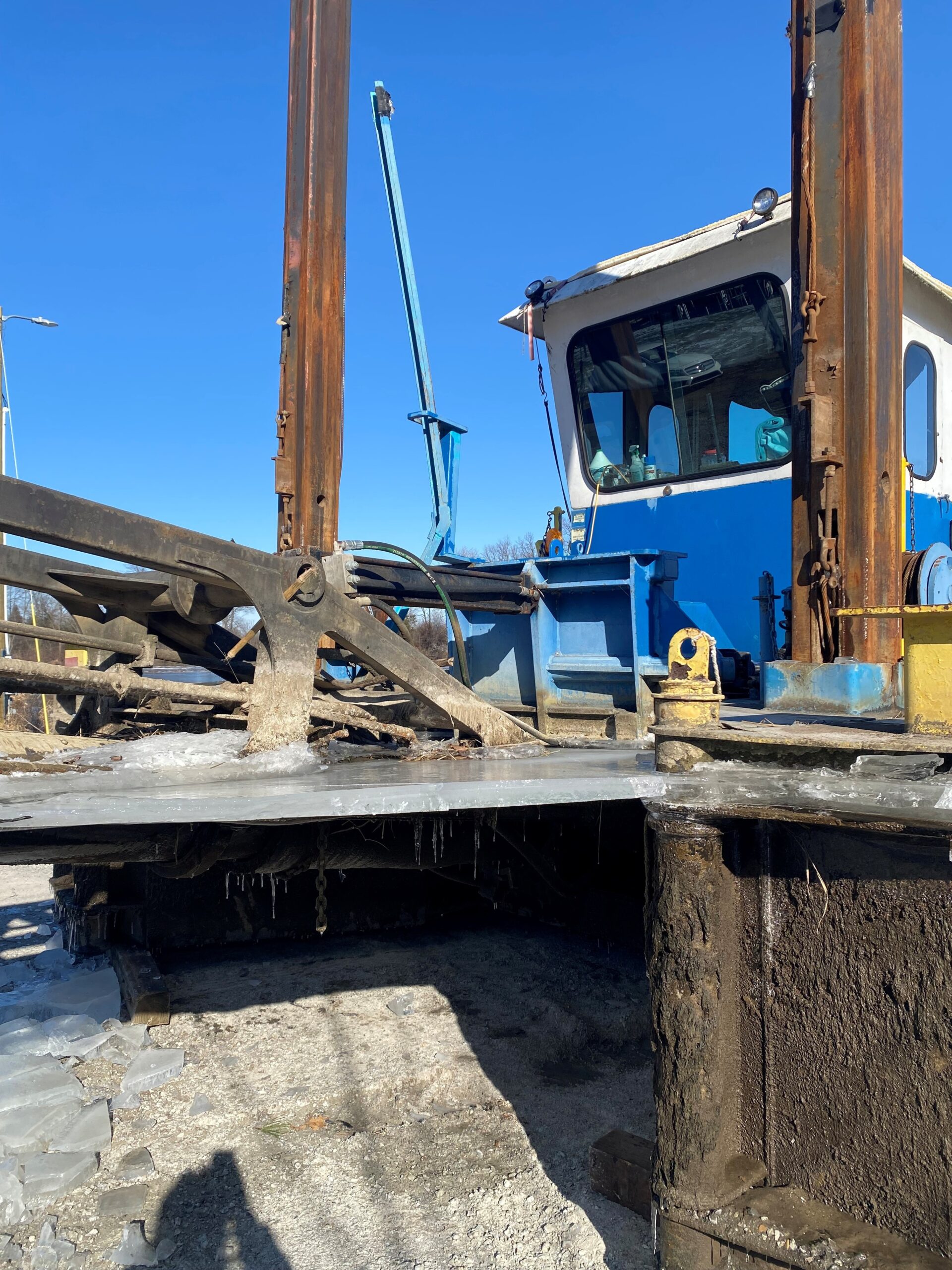
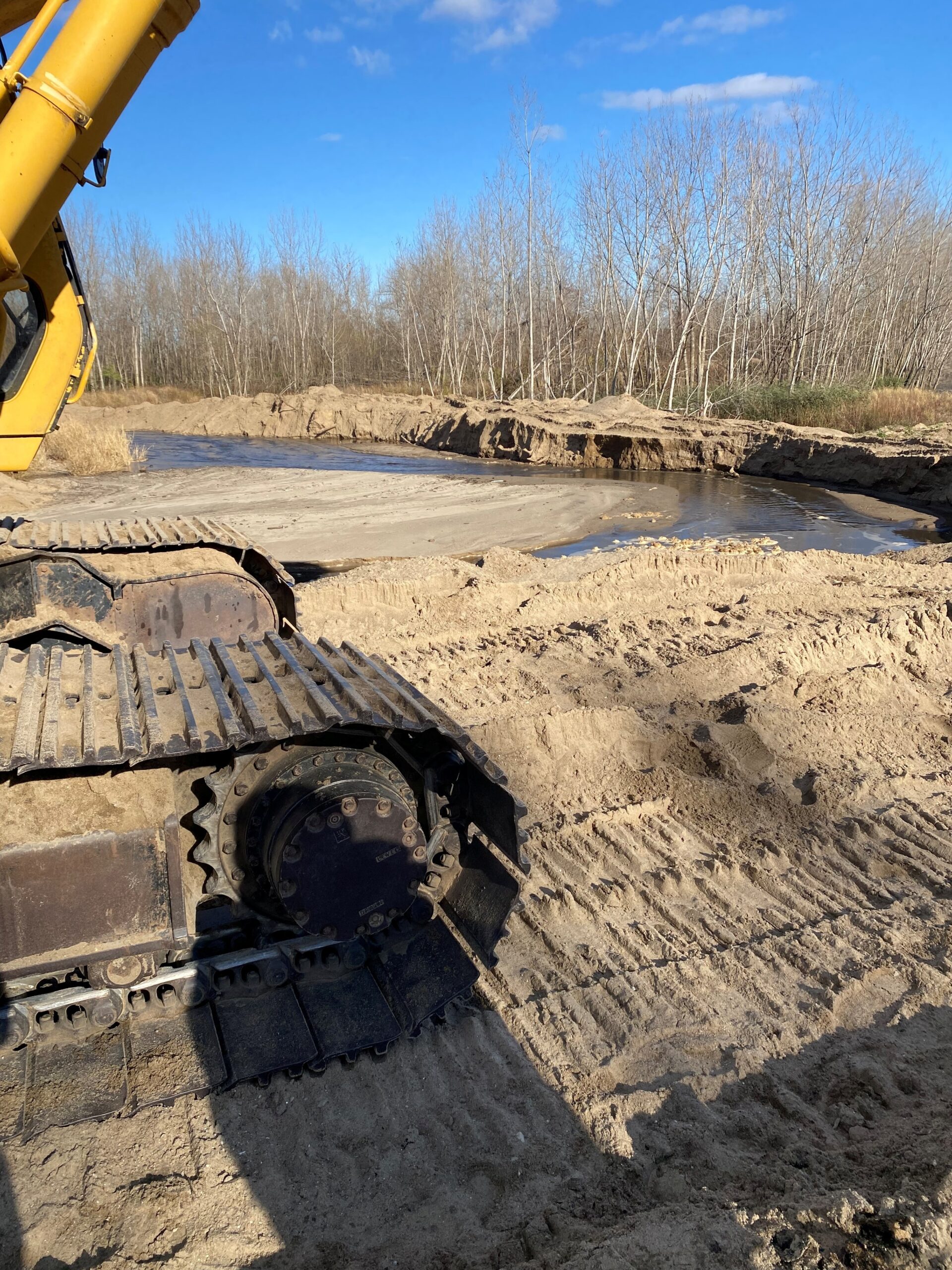
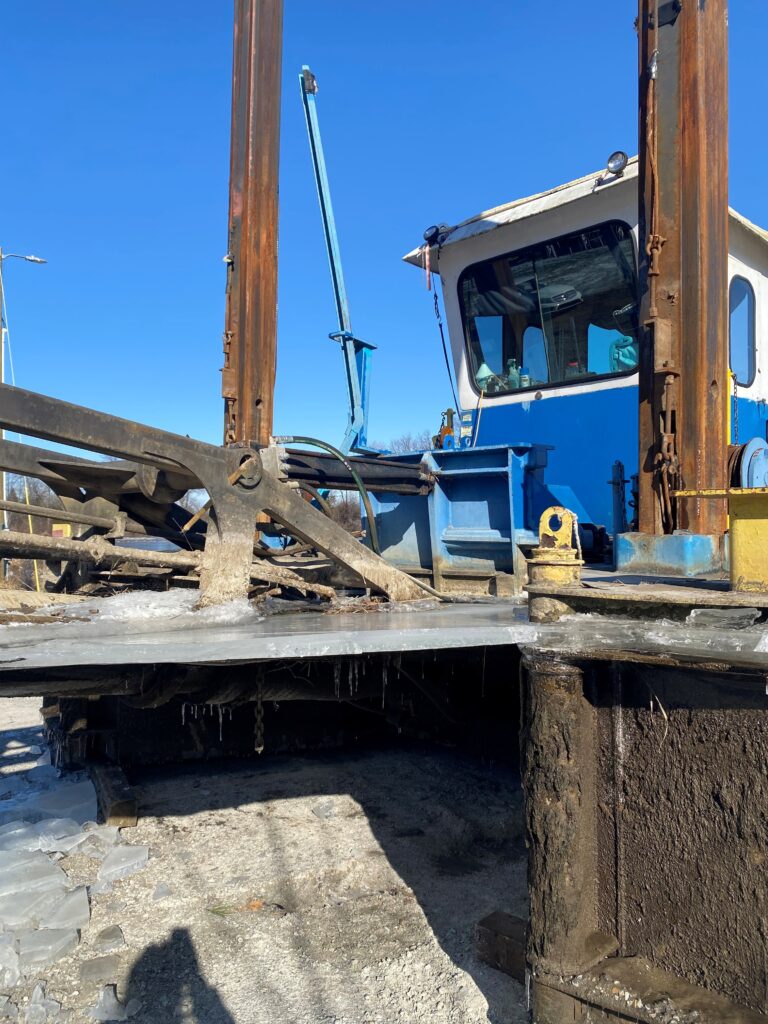
The dredge crew has been busy making several repairs and is currently dredging the area along Cooper Drive.
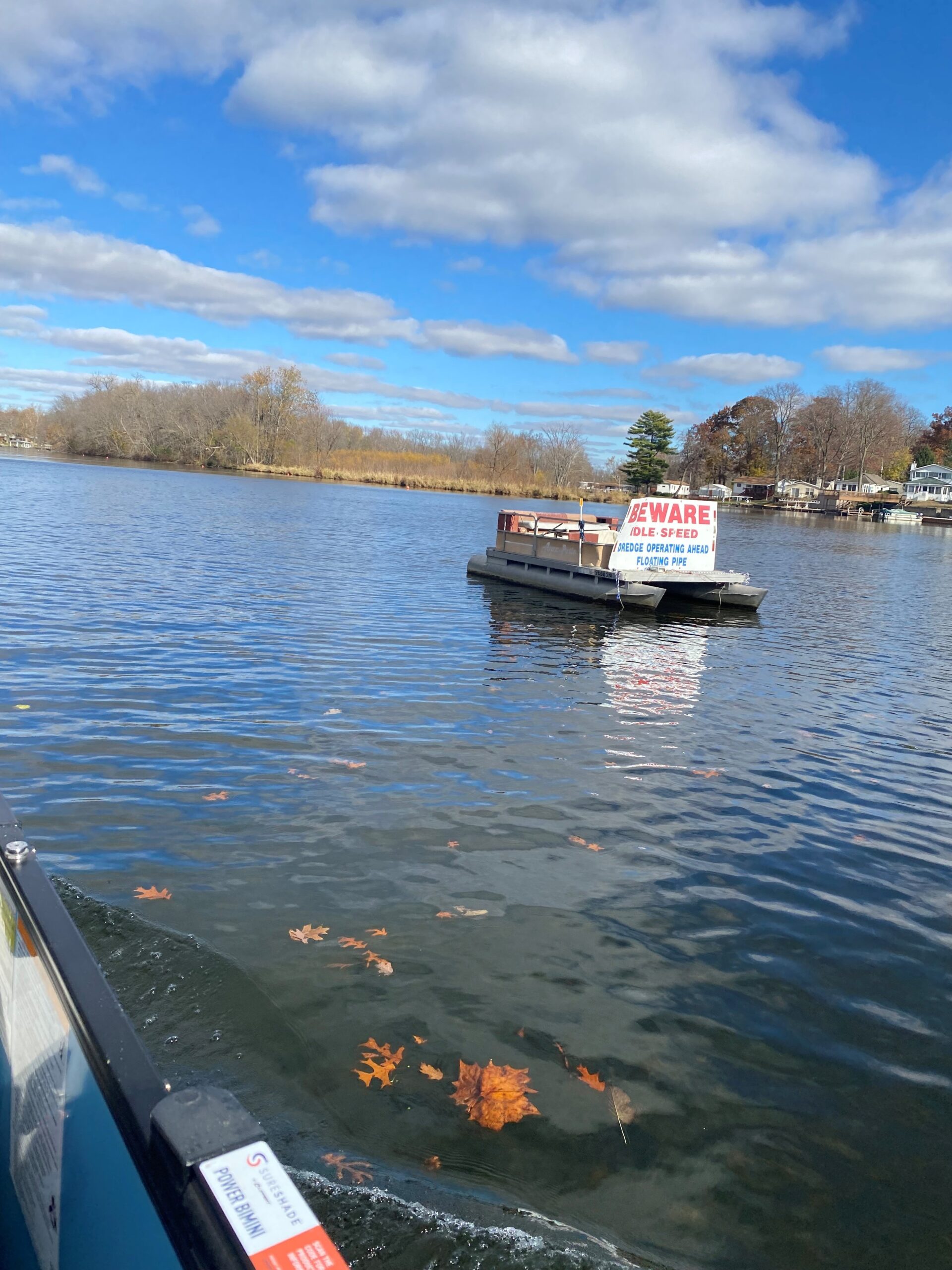
Dredging for the 2026 season will continue on Lake Shafer. Please be aware of the pipeline and buoys marking the dredging zones, which are within Idle Zones enforced by the Indiana Department of Natural Resources.
🌿Cleanup Crew
The Cleanup Crew operates on Lake Freeman and Lake Shafer using pontoon boats marked “SFLECC.” The crew helps remove debris and floating logs in heavily trafficked recreational areas for the safety of lake goers during the busy lake season.
To report large floating logs:
Call SFLECC at (574) 583-9784 to submit a work order.
If a tree is still attached to the shoreline, it cannot be removed due to the Indiana Department of Natural Resources regulations protecting fish habitats.
Please be patient; our crew is addressing tickets in the order received.
How you can help:
Mark hazards with an empty milk jug.
Pick up smaller floating debris in your area.
Do NOT dump leaves, grass clippings, or any hazardous materials into the lakes.
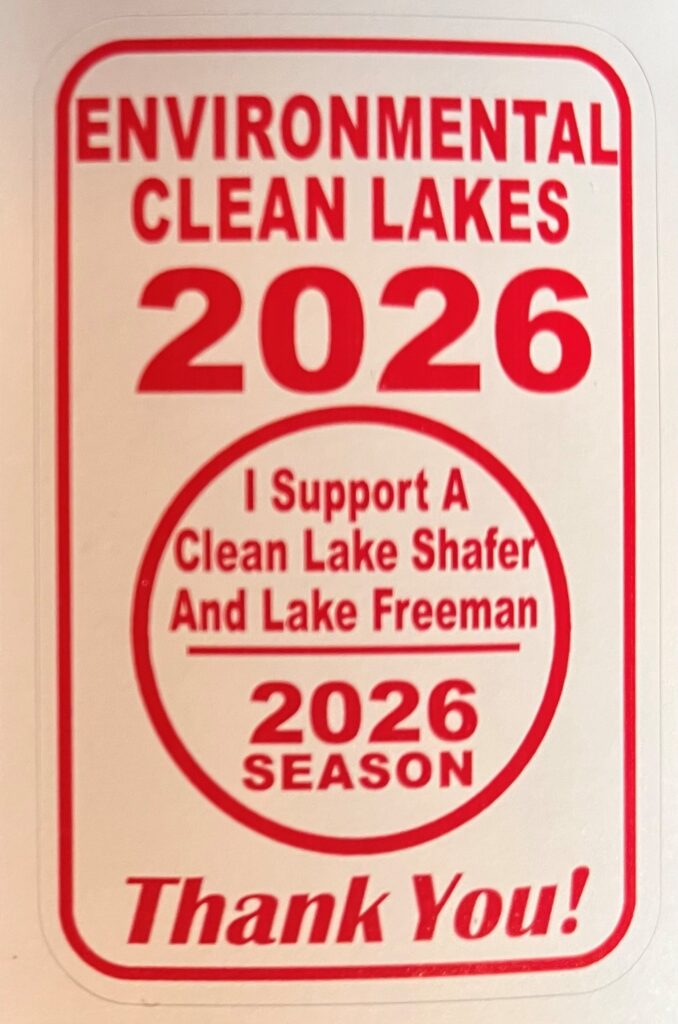
Your voluntary purchase of Clean Lakes Stickershelps offset Cleanup Crew expenses. Each set includes a discount card for local businesses.
Thank you for your continued support in keeping our lakes clean, beautiful, and safe!
🏡Shorefront Licenses
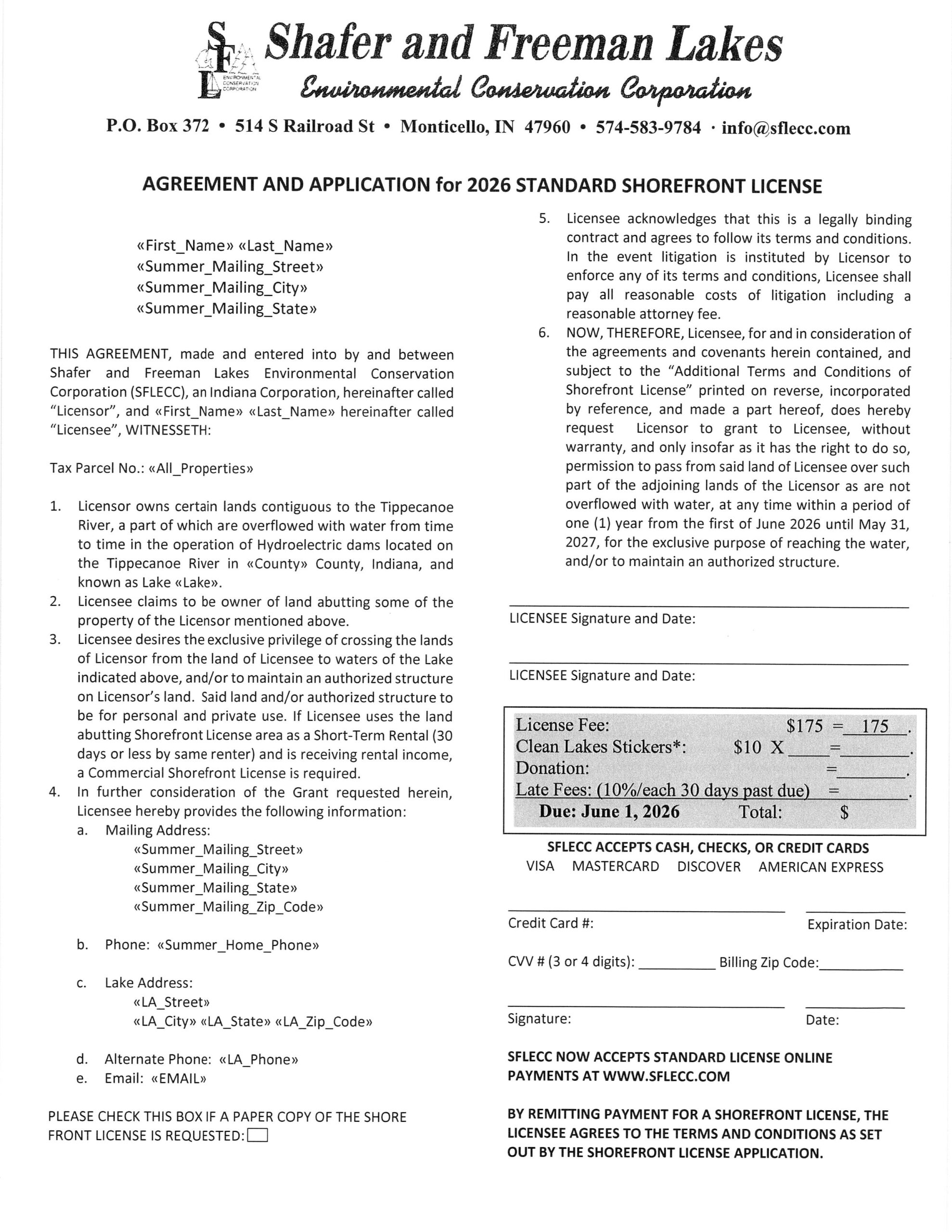
2026 Shorefront License applications have been mailed and are due June 1st. Standard Shorefront License holders are also able to pay at SFLECC Online Store. All other Licenses (Association, Commercial, Easement, or Specific) can be paid by mail or by calling our office at 574-583-9784.
🛠️Shorefront Construction
Q: When is a construction application needed?
A: A construction application is needed when an SFLECC shorefront license holder plans to install any kind of shorefront improvements such as permanent boat/PWC lifts, temporary boat/PWC lifts, piers, decking, and/or seawalls.
Q: How do I get a construction application?
A: Construction applications can be obtained on our website www.sflecc.com, by calling our office 574-583-9784, or by visiting our office at 514 S Railroad St Monticello, IN. Another way is to check with your contractor (most of the contractors on our Registered Contractors List have them and will fill this information out with you.)
Q: What does the construction application consist of?
A: There are guidelines on the first page of the construction application and the second page is for the homeowner to fill out, complete with name, address, and the contractor that is doing the work. The third page is used for drawing what you plan on having done, with measurements. The last page will be used if you do not meet the guidelines and need to get a variance from adjoining shorefront license holders.
Q: Is there a fee for the construction application?
A: Yes, there is a base fee of $100. The total can increase depending on what you’re having done.
Q: Who can do work on Lake Freeman and Lake Shafer for me?
A: The SFLECC has a Registered Contractors List. The list has contractors’ names, the type of work they do, and what lakes they work on. We do allow self-contracted work as well.
Q: How long is the construction application valid?
A: The construction application is valid for one year.
Q: What if I have a temporary boat/PWC lift and want to take it out at the end of the season and put it back in the next spring?
A: You can put the same boat/PWC lift in at the same exact location without a construction application, as long as it has not been out for more than 12 months.
Q: What if I have a temporary boat/PWC lift and want to replace it with a new temporary lift?
A: You can do so without a construction application as long as it matches the exact footprint of the previous lift. If your new lift is larger and/or does not match the same footprint, you need a construction application.
Q: What if I am replacing my temporary boat/PWC lift with a permanent lift?
A: You will need to fill out a construction application and obtain a permit.
Q: What if I am replacing boards or decking on an existing pier?
A: You will not need a construction application if you are only doing repair work and the exact footprint of pier is unchanged.
Q: What if I want to replace or put in a new seawall?
A: You will need to fill out a construction application and obtain a permit.
Q: What if I want to repair a section of my seawall with the same material?
A: In this case, it is a repair and you do not need a construction application. If using a different material though, please call our office to verify we allow that material.
For more information on Shorefront Construction contact our Land Manager, Owen Lovvorn, at 574-583-9784 or owen@sflecc.com
We hope everyone enjoys a safe and wonderful season on our beautiful lakes!
In March, your lakes are transitioning from Winter to Spring. The water temperature is still cold, limiting significant plant or algae growth. However, activity is starting to happen, some that you can’t necessarily see, that will impact how your lake “behaves” come Summer.
Filamentous Algae
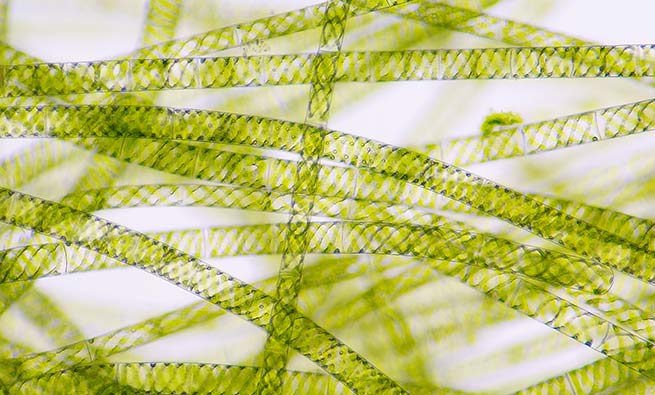
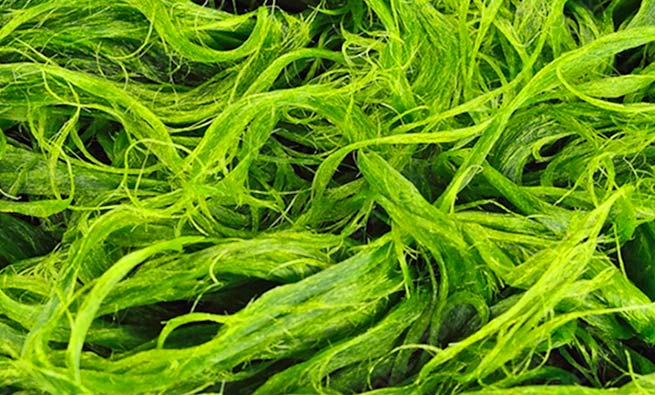
As temperatures warm up, early growth of bright green stringy algae called Spirogyra often appears in shallow areas. While Spirogyra, and all algae species for that matter, are essential for oxygen production when present in moderation, large blooms can deplete oxygen levels in the water as it decomposes, leading to fish kills and other negative impacts on aquatic organisms. Decaying Spirogyra mats can also release nutrients into the water, contributing to eutrophication and planktonic algal blooms.
Spirogyra algae under a microscope
Spirogyra algae
Aquatic Plants
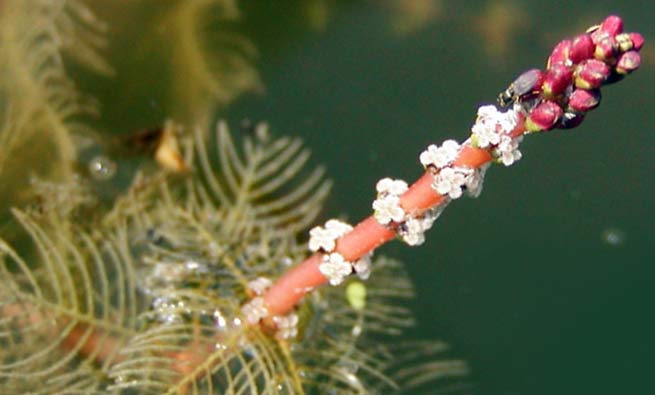
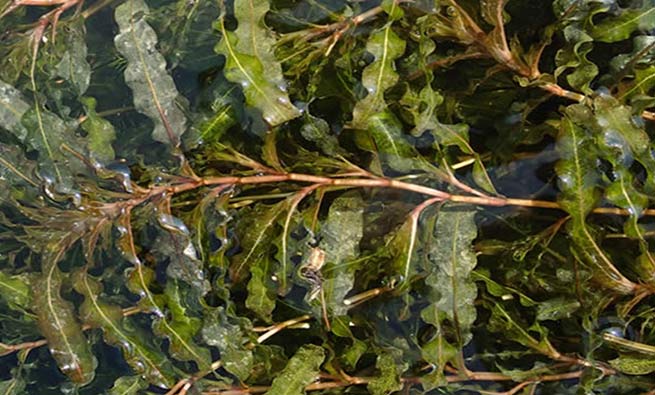
Our area’s most aggressive submerged invasive aquatic plants, especially Eurasian Watermilfoil (Myriophyllum spicatum) and Curlyleaf Pondweed (Potamogeton crispus), start emerging in March. These plants are notorious for growing early, taking up space we would like to see occupied by native plants.
Eurasian Watermilfoil with seed head
Curlyleaf Pondweed
Emergent Plants
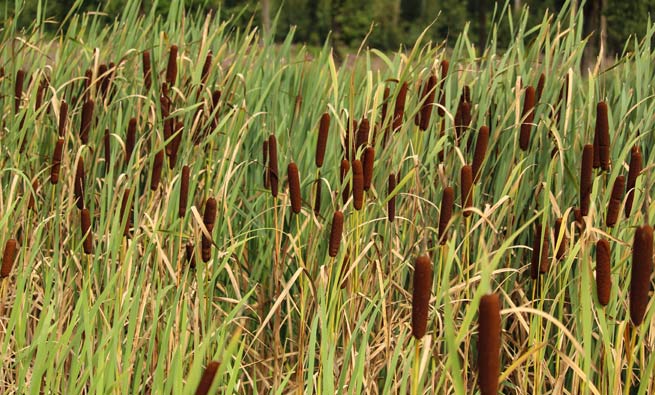
Cattails (Typha spp.) and bulrushes (Schoenoplectus spp.) start greening up along the shoreline. Narrow-leaf cattail is a non-native species widespread in our area.
Cattails
Floating Plants
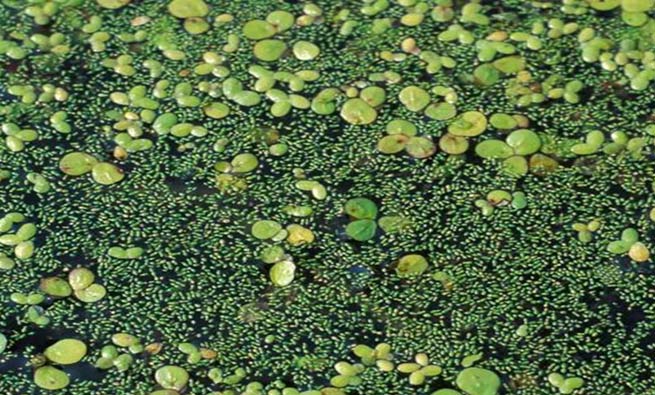
Duckweed and Watermeal are other potential plant growth in late spring. If your lake has a history of these tiny floating plants (Lemna or Wolffia spp.), they might begin emerging as the water warms.
Duckweed and Watermeal
Duckweed, although bothersome, is a native aquatic plant to our area. It is more prevalent in inlets and bays. We understand the concern with duckweed in the Big Monon Bay on Lake Shafer. This area, specifically, was brought to the attention of SFLECC’s Aquatic Vegetation Committee. We have had several discussions with Indiana Department of Natural Resources (INDNR) about duckweed and since it is not an invasive species, they have told us “it is nature, and we have to live with it”. Furthermore, the INDNR will not give permits to treat duckweed. We need a water flow to move it along, and unfortunately, when we have little rain, there is minimal flow and it sticks around for too long.
We have also had talks with other lake associations about this problem. They also say it is a nuisance for them, but not much they can do about it. A few of the lake associations have had some success with lake thruster devices. They are a bit expensive, but can push the duckweed downstream faster into the main lake. As of now, this is the only option we can recommend that has had some success and is within the parameters of what INDNR allows.
The SFLECC removes about 168 cubic yards/hour of silt material. So based on the dredge operating hours averaging 37.17/week from September thru October 2025, an estimated 6,245 cubic yards of silt material (or about 446 standard dump truck loads) have been removed from the lake.
The crew is currently dredging near the Cooper Drive area and will continue into the next few weeks (weather permitting).
Over 200 people showed up to vote for 14 candidates to fill five open positions on the Board of Directors. The meeting was delayed 30 minutes to ensure everyone had an opportunity to register and vote. Approximately 75 stayed for the meeting.
Board President Carrie Woodruff opened the meeting and defined the purpose of the SFLECC and read the mission.
Jack Werner read the slate of candidates and then read the statement regarding the board member situation.
Carrie then went through the financial statement and highlighted the big savings Co-Director & Land Manager, Owen Lovvorn, realized with insurance. She also talked about the funds recouped from treating the invasive Milfoil on Lake Shafer.
Co-Director/Land Manager Owen Lovvorn gave a complete overview of field operations, including the dredging plan for both lakes. Owen also profiled the financial expenses of maintaining and repairing the dredge and excavator. Most of the attendees were from Lake Shafer and raised concerns and questions regarding operations.
Carrie Woodruff then thanked those board members whose 2 terms were ending: Lindy Karberg, Tracey Linder, and herself, and gifts were given.
A period of Questions and Answers followed with most of the concerns being about aquatic vegetation and SFLECC/DNR’s roles in controlling it. Dredging concerns were also mentioned specifically in areas of Big Monon/Bedford Bay, Penrod Dr, Snow Ditch, and Lane Ditch. The Silt Committee is drawing up a 3-year plan to address dredging areas.
At this point, the meeting concluded, and votes were counted by the Nominations Committee. After counting over 200 votes, the SFLECC welcomed 5 new Board Members: Joe Bauer, Todd Lemen, Mike McGuin, Kathy Rokita, and Rick Stetler. Thanks to all the candidates for running and members for attending the SFLECC Annual Meeting.
![attachment] - Fall Leaf Emoji Png Transparent PNG - 500x500 - Free Download on NicePNG](https://www.nicepng.com/png/detail/220-2202002_attachment-fall-leaf-emoji-png.png)